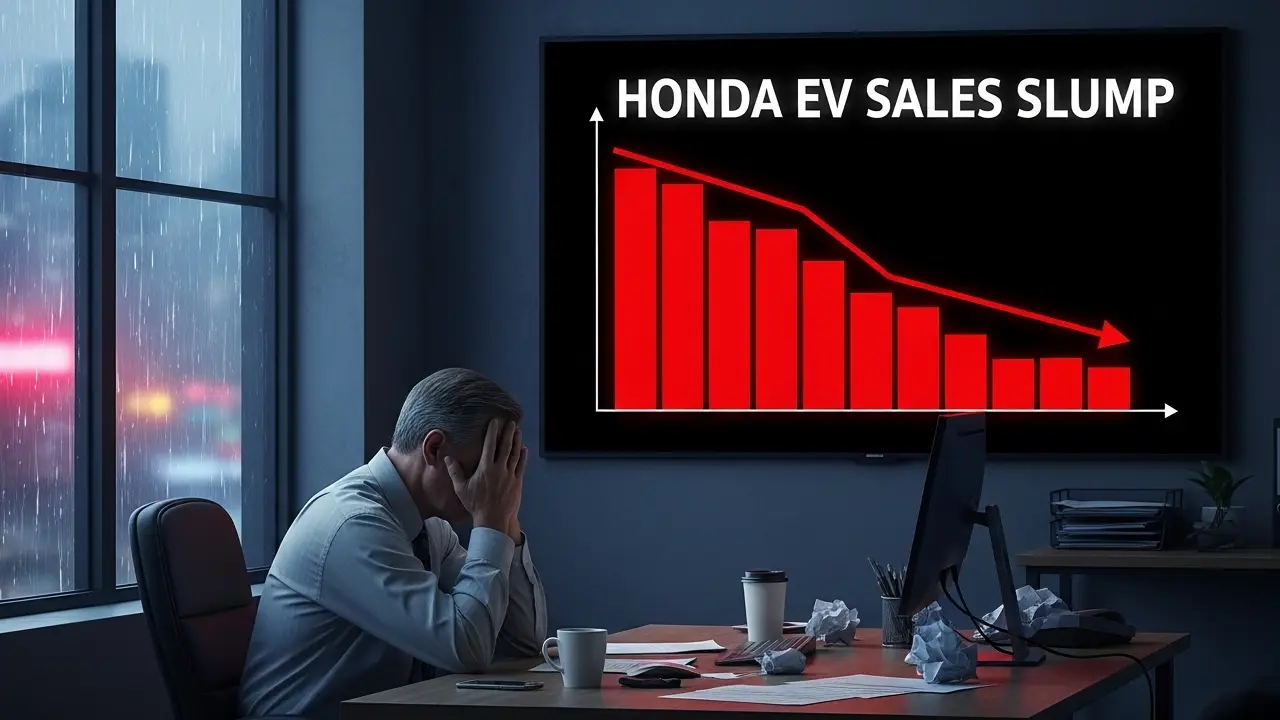
The global automotive industry is rapidly transitioning toward electric mobility, yet not all manufacturers are experiencing smooth growth. The recent Honda EV sales slump has become a topic of discussion among analysts, investors, and consumers alike. While competitors continue to expand their electric vehicle portfolios, Honda appears to be facing challenges in gaining traction within this evolving market.
This slowdown does not necessarily signal failure, but it highlights important strategic gaps and market realities. Understanding the reasons behind Honda’s EV performance offers valuable insights into the broader electric vehicle landscape.
Understanding the Current Honda EV Sales Slump
The Honda EV sales slump reflects a combination of limited product availability, cautious market entry, and shifting consumer expectations. Unlike some competitors that aggressively pushed electric models early, Honda has taken a more measured approach.

In several key markets, Honda’s EV lineup remains relatively small compared to rivals offering a wide range of affordable and premium electric vehicles. This limited availability has directly impacted sales volume and brand visibility in the EV segment.
Key Reasons Behind Honda’s Declining EV Sales
Several factors contribute to the slowdown in Honda’s electric vehicle sales. One major issue is the delayed rollout of dedicated EV platforms. While other automakers invested early in electric-specific architectures, Honda relied heavily on hybrid technology before shifting focus.
Another factor is pricing competitiveness. Many consumers are looking for affordable EV options, yet Honda’s offerings in some regions are positioned at higher price points without strong differentiation. This has made it harder to attract budget-conscious buyers.
Strong Competition in the Electric Vehicle Market
The EV market has become increasingly competitive, with both established brands and new entrants offering innovative products. Companies like Tesla, BYD, and Hyundai have built strong reputations for electric mobility.
This intense competition means that consumers have more choices than ever before. Without a compelling value proposition, even well-known brands like Honda can struggle to maintain market share in the EV segment.
Honda’s Strategy: A Focus on Hybrids First
Honda has historically prioritized hybrid vehicles as a transitional technology. This approach allowed the company to maintain fuel efficiency improvements without fully committing to battery electric vehicles early on.
While hybrids remain popular, the rapid global shift toward fully electric vehicles has reduced their long-term appeal. This strategic delay is now contributing to the Honda EV sales slump, as competitors move ahead with fully electric portfolios.
Supply Chain and Production Challenges
Like many automakers, Honda has faced supply chain disruptions, particularly in sourcing batteries and semiconductor components. These challenges have limited production capacity and delayed new model launches.
Production constraints not only reduce availability but also impact delivery timelines, which can discourage potential buyers from choosing Honda EVs over readily available alternatives.
Consumer Expectations Are Changing Rapidly
Modern EV buyers expect advanced features such as long driving range, fast charging, and smart connectivity. While Honda vehicles are known for reliability, some EV models have not matched the technological expectations set by competitors.
This gap in perceived innovation has made it harder for Honda to appeal to tech-savvy consumers who prioritize cutting-edge features when purchasing electric vehicles.
Global Market Trends Impacting Honda EV Sales
The global EV market is influenced by government incentives, charging infrastructure, and regional policies. In some regions, slower infrastructure development has limited EV adoption overall.
However, in markets where EV adoption is accelerating rapidly, Honda’s limited presence has made it difficult to capitalize on growth opportunities. This imbalance contributes to the ongoing Honda EV sales slump.
Honda’s Future Plans to Revive EV Sales
Despite current challenges, Honda is actively working to strengthen its EV strategy. The company has announced plans to introduce new electric models based on dedicated platforms and expand partnerships for battery development.

Investments in software, connectivity, and autonomous driving technologies are also expected to play a key role in improving Honda’s competitiveness in the electric vehicle market.
Importance of Charging Infrastructure Expansion
A strong charging network is essential for EV adoption. Honda is collaborating with partners to enhance charging accessibility and improve user convenience.
Expanding infrastructure will not only support existing customers but also encourage new buyers to consider Honda EVs as a practical alternative to traditional vehicles.
How Honda Can Compete More Effectively
To overcome the Honda EV sales slump, the company needs to accelerate product development and introduce models that cater to different price segments. Affordable EVs, in particular, could help increase adoption in emerging markets.
Additionally, focusing on design innovation, improved battery performance, and enhanced digital features will help Honda attract a broader audience in the competitive EV landscape.
Impact on Honda’s Brand Image
Honda has long been associated with reliability and engineering excellence. However, the EV transition is reshaping consumer perceptions of automotive brands.
If Honda can successfully address its current challenges and deliver competitive electric vehicles, it has the potential to regain momentum and strengthen its reputation in the evolving market.
Comparison Table (Typical Honda EV vs Competitors)
| Feature | Honda EV (Typical) | Competitor EVs |
|---|---|---|
| Driving Range | Moderate (300–400 km) | High (400–600+ km) |
| Charging Speed | Standard fast charging | Ultra-fast charging options |
| Price Range | Mid to premium | Budget to premium options |
| Technology Features | Basic to moderate | Advanced AI & connectivity |
| Model Variety | Limited lineup | Wide variety of models |
Conclusion
The Honda EV sales slump highlights the challenges of transitioning into a rapidly evolving electric vehicle market. While the company has strong engineering capabilities and brand trust, adapting quickly to changing consumer expectations is essential.
With planned investments and new product launches, Honda has the potential to regain its position. The coming years will be critical in determining how effectively the company can compete in the global EV race.
FAQs
1. Why is Honda experiencing an EV sales slump?
Honda’s EV sales slowdown is mainly due to limited model availability, strong competition, and delayed entry into the fully electric vehicle market.
2. Does Honda plan to expand its EV lineup?
Yes, Honda has announced plans to launch new electric models and invest in advanced battery technology to improve its EV offerings.
3. Are Honda EVs less advanced than competitors?
Honda EVs are reliable but may lack some advanced features and range capabilities offered by leading competitors.
4. Will the EV sales slump affect Honda’s future?
While it presents challenges, Honda’s ongoing investments and strategic changes could help the company recover and grow in the EV market.
5. Is now a good time to buy a Honda EV?
It depends on your needs. If you value reliability and brand trust, Honda EVs remain a solid option, but buyers seeking cutting-edge features may compare alternatives.