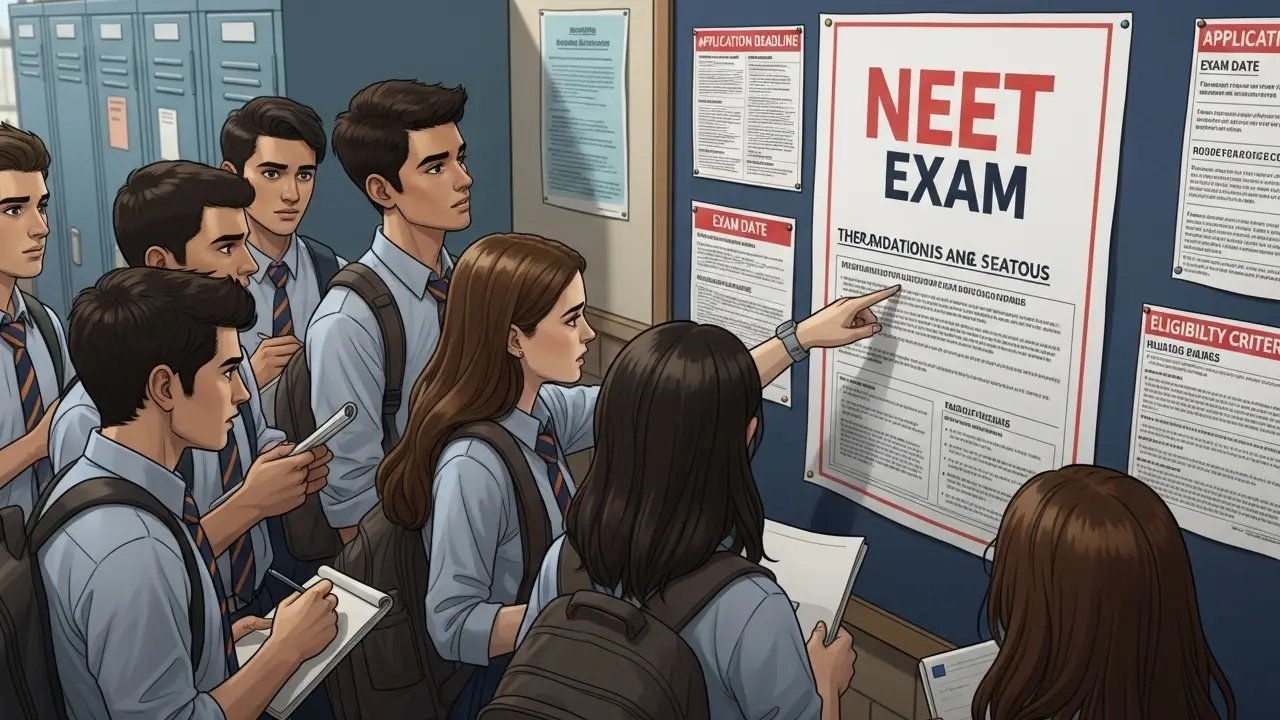
The NEET Exam (National Eligibility cum Entrance Test) is one of the most important entrance exams for students aiming to pursue medical education in India. Conducted annually, this exam determines admission into MBBS, BDS, and other medical courses in both government and private institutions.
With increasing competition every year, understanding the exam structure, syllabus, eligibility, and preparation strategy has become essential. This guide provides a complete overview of the NEET Exam to help students prepare effectively and make informed decisions.

What is NEET Exam?
The NEET Exam is a national-level medical entrance test conducted by the National Testing Agency (NTA). It is the single gateway for admission to undergraduate medical courses across India.
Previously, multiple entrance exams existed, but now NEET has standardized the admission process, ensuring transparency and fairness. Students who qualify NEET can apply for various medical colleges based on their scores and rank.
NEET Exam Eligibility Criteria
Before applying, students must meet certain eligibility requirements. These criteria ensure that candidates are academically prepared for medical studies.
Educational Qualification: Candidates must have completed or be appearing in 12th grade with Physics, Chemistry, and Biology as core subjects. English is also mandatory.
Minimum Marks: General category students must secure at least 50% marks in PCB subjects, while reserved categories have relaxed criteria.
Age Limit: Candidates must be at least 17 years old at the time of admission. There is no strict upper age limit as per recent updates.
NEET Exam Pattern 2026
Understanding the exam pattern is crucial for effective preparation. The NEET Exam follows a structured format that tests conceptual knowledge and problem-solving skills.
Mode: Offline (Pen and Paper)
Duration: 3 hours 20 minutes
Total Questions: 200 (180 to be attempted)
Subjects: Physics, Chemistry, Biology (Botany + Zoology)
Each correct answer awards 4 marks, while 1 mark is deducted for every incorrect answer. Strategic answering is essential to maximize scores.
NEET Exam Syllabus
The NEET syllabus is based on NCERT textbooks for Classes 11 and 12. It covers fundamental concepts required for medical studies.
Physics: Mechanics, Thermodynamics, Optics, Modern Physics
Chemistry: Organic, Inorganic, and Physical Chemistry
Biology: Human Physiology, Genetics, Ecology, Plant Biology
Students should focus on NCERT books as they form the core of the syllabus. Most questions are directly or indirectly based on these concepts.
NEET Exam Preparation Tips
Preparing for the NEET Exam requires consistency, discipline, and a well-planned strategy. Random studying often leads to confusion and burnout.
Create a Study Plan: Divide your syllabus into manageable sections and allocate time for each subject daily.
Focus on NCERT: Most toppers emphasize revising NCERT multiple times, especially for Biology.
Practice Mock Tests: Regular mock tests help improve time management and accuracy.

Revise Regularly: Revision is key to retaining concepts. Make short notes for quick revision.
Avoid Guesswork: Since there is negative marking, avoid answering questions you are unsure about.
NEET Exam Important Dates (Expected)
Although official dates may vary each year, the general timeline for the NEET Exam remains similar.
Application Start: January
Last Date to Apply: February
Admit Card Release: April
Exam Date: May
Result Announcement: June
Students should regularly check official notifications to stay updated and avoid missing deadlines.
NEET Exam Specifications Table
| Feature | Details |
|---|---|
| Exam Name | NEET (National Eligibility cum Entrance Test) |
| Conducting Body | National Testing Agency (NTA) |
| Mode | Offline (Pen & Paper) |
| Duration | 3 Hours 20 Minutes |
| Total Questions | 200 (180 Attempted) |
| Subjects | Physics, Chemistry, Biology |
| Marking Scheme | +4 Correct, -1 Incorrect |
| Eligibility | 12th with PCB |
Why NEET Exam is Important?
The NEET Exam plays a crucial role in shaping the future of aspiring doctors. It ensures a uniform admission process across the country, reducing confusion and maintaining academic standards.
It also allows students from different regions to compete on the same platform, ensuring equal opportunities for all candidates based on merit.
Common Mistakes to Avoid in NEET Exam Preparation
Many students make avoidable mistakes during preparation, which can impact their performance in the NEET Exam.
Ignoring NCERT: Skipping NCERT books can lead to missing key concepts.
Lack of Practice: Not solving previous year papers reduces exam familiarity.
Poor Time Management: Spending too much time on one subject can imbalance preparation.
Overconfidence: Even strong students should regularly revise and practice.
FAQs About NEET Exam
1. What is the NEET Exam used for?
The NEET Exam is used for admission to MBBS, BDS, and other medical courses in India.
2. Is NEET Exam very difficult?
The difficulty level is moderate to high, depending on preparation and conceptual clarity.
3. Can I crack NEET without coaching?
Yes, many students succeed through self-study with proper planning and discipline.
4. How many attempts are allowed in NEET?
There is no fixed limit on attempts as long as eligibility criteria are met.
5. Which subject is most important in NEET?
Biology carries the highest weightage, but all subjects are important for overall scoring.