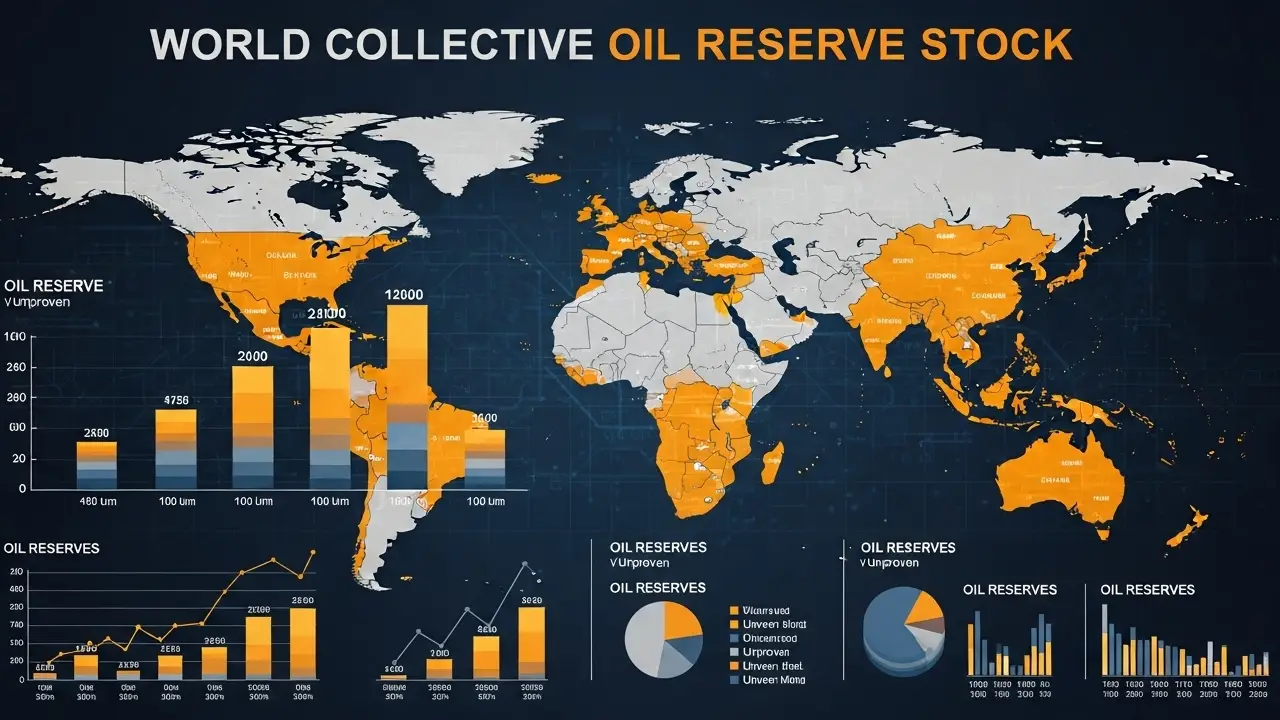
The world collective oil reserve stock plays a crucial role in maintaining global energy stability and economic balance. As nations continue to depend heavily on petroleum for transportation, manufacturing, and electricity generation, understanding how oil reserves are managed worldwide becomes increasingly important.
This article provides a detailed and reliable overview of global oil reserves, how they are stored, which countries dominate supply, and why these reserves matter for both developed and developing economies.
What is World Collective Oil Reserve Stock?
The world collective oil reserve stock refers to the total amount of crude oil stored globally. These reserves include both proven underground reserves and strategic petroleum reserves held by governments for emergency use.

Proven reserves are quantities of oil that geological and engineering data confirm can be extracted under existing economic and operational conditions. On the other hand, strategic reserves are stored above ground in facilities such as tanks or underground caverns, mainly for crisis management.
Types of Oil Reserves Around the World
Global oil reserves are generally categorized into different types based on accessibility and certainty:
Proven Reserves: These are the most reliable and economically viable reserves. Countries report these figures annually.
Probable Reserves: These have a lower level of certainty but are still considered likely to be extracted in the future.
Strategic Reserves: Maintained by governments, these reserves are used during supply disruptions, natural disasters, or geopolitical tensions.
Understanding these categories helps investors, policymakers, and industries evaluate global energy security more accurately.
Top Countries with the Largest Oil Reserves
::contentReference[oaicite:1]{index=1}
Several countries dominate the global oil reserve landscape. These nations hold a significant portion of the world’s total oil stock:
Venezuela: Holds one of the largest proven oil reserves globally, mainly in heavy crude form.
Saudi Arabia: A key player in global oil markets with vast, easily extractable reserves.
Canada: Known for its oil sands, Canada has large reserves, though extraction is more complex.
Iran and Iraq: Both countries possess substantial reserves and play critical roles in regional energy supply.
These countries significantly influence global oil prices and supply chains.
Why Strategic Oil Reserves Matter
Strategic petroleum reserves are essential for protecting economies from sudden oil supply shocks. Governments store oil to ensure continuity during:
Natural disasters such as hurricanes or earthquakes
Geopolitical conflicts affecting oil-producing regions
Sudden spikes in global demand
For example, many developed countries maintain reserves that can supply their population for several weeks or even months during emergencies.
How Oil Reserves Impact Global Economy
The world collective oil reserve stock directly affects global economic stability. When reserves are high, oil prices tend to stabilize or decrease. Conversely, limited supply can lead to price volatility.
Oil prices influence multiple sectors including transportation, manufacturing, agriculture, and energy production. Therefore, fluctuations in reserves can impact inflation rates and economic growth worldwide.
Oil Storage Methods and Technologies
Countries use various methods to store oil safely and efficiently:
Underground Caverns: Large salt caverns are often used for storing strategic reserves due to their safety and cost-effectiveness.

Above-Ground Tanks: Steel storage tanks are widely used for commercial oil storage.
Floating Storage: Oil tankers can serve as temporary storage units during supply surpluses.
Advancements in storage technology have improved safety standards and reduced environmental risks.
Challenges Facing Global Oil Reserves
Despite the abundance of oil reserves, several challenges affect their management and sustainability:
Environmental Concerns: Oil extraction and storage can lead to pollution and ecological damage.
Geopolitical Tensions: Conflicts in oil-rich regions can disrupt supply chains.
Energy Transition: The shift towards renewable energy sources is gradually reducing dependence on fossil fuels.
These factors are shaping the future of global oil reserves and influencing long-term energy strategies.
Future Outlook of World Oil Reserves
The future of the world collective oil reserve stock depends on several evolving factors. While oil remains a critical energy source, the increasing adoption of renewable energy technologies is expected to change demand patterns.
However, oil is likely to remain relevant for decades, particularly in developing economies where infrastructure still relies heavily on fossil fuels.
Countries are also investing in cleaner extraction technologies and more efficient storage systems to reduce environmental impact.
Global Oil Reserves
| Category | Details |
|---|---|
| Total Global Proven Reserves | Approximately 1.6 to 1.7 trillion barrels |
| Top Reserve Holder | Venezuela |
| Strategic Reserve Purpose | Emergency supply during crises |
| Main Storage Methods | Underground caverns, tanks, floating storage |
| Key Influencing Factors | Demand, geopolitics, technology, environmental policies |
Frequently Asked Questions (FAQs)
1. What is meant by world collective oil reserve stock?
It refers to the total amount of oil reserves available globally, including both underground reserves and stored oil for emergency use.
2. Which country has the largest oil reserves?
Venezuela is widely recognized as having the largest proven oil reserves in the world.
3. Why do countries maintain strategic oil reserves?
Countries store oil to ensure supply during emergencies such as natural disasters or geopolitical disruptions.
4. How do oil reserves affect fuel prices?
Higher reserves usually stabilize prices, while shortages can lead to increased fuel costs.
5. Will oil reserves run out in the future?
While oil is a finite resource, new discoveries and improved technologies continue to extend its availability. However, global focus is shifting toward renewable energy.
Conclusion
The world collective oil reserve stock remains a cornerstone of global energy systems. It supports economic growth, ensures energy security, and helps manage market stability. While the world gradually transitions to cleaner energy sources, oil reserves will continue to play a vital role in meeting global energy demands.
Understanding how these reserves are distributed, stored, and utilized provides valuable insight into the future of energy and the global economy.