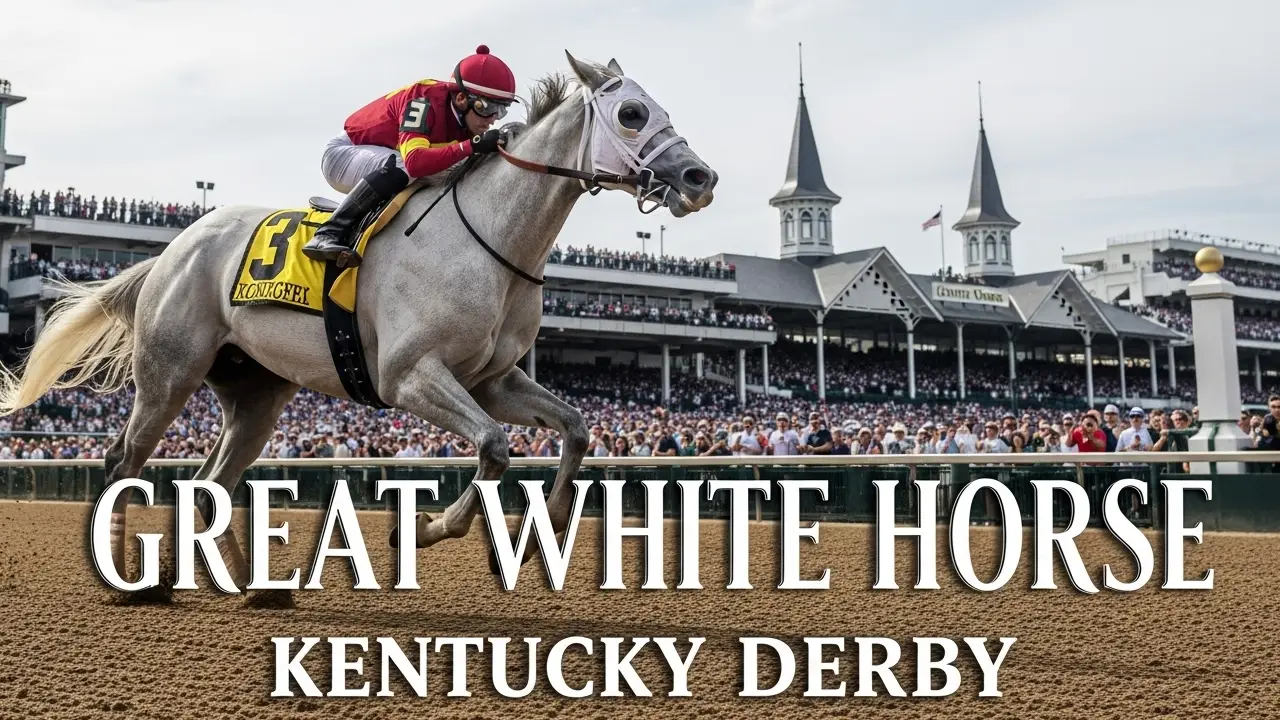
The Great White Horse Kentucky Derby topic has captured the curiosity of horse racing fans for decades. While the Kentucky Derby is known for its rich traditions, elite thoroughbreds, and historic moments, one question often stands out — has a truly white horse ever made history in this prestigious race?
This article explores the fascinating truth about white horses in the Kentucky Derby, the genetics behind coat colors, and why such horses remain incredibly rare in the world of professional racing.
Understanding the Kentucky Derby Tradition
The Kentucky Derby is one of the most celebrated horse racing events in the world, held annually at Churchill Downs in Louisville, Kentucky. Known as “The Most Exciting Two Minutes in Sports,” it brings together the best three-year-old thoroughbred horses competing for glory.

Over the years, the race has seen champions of various colors, but one thing remains consistent — pure white horses have never officially won the Kentucky Derby. This has fueled ongoing discussions and interest among fans and breeders alike.
What Is a Great White Horse in Horse Racing?
The term “Great White Horse” often refers to a horse that appears completely white in color. However, in scientific and breeding terms, most horses that look white are actually gray horses.
Gray horses are born with darker coats such as black or brown and gradually lighten over time due to a genetic trait. By adulthood, many appear almost completely white, leading to confusion among spectators.
True White Horses vs Gray Horses
It is important to understand the difference between a true white horse and a gray horse:
True White Horses: Born with white hair and pink skin. These are extremely rare due to specific genetic conditions.
Gray Horses: Born dark and gradually turn lighter as they age. Most “white-looking” racehorses fall into this category.
This distinction explains why many people believe a white horse has raced in the Kentucky Derby when, in reality, it was a gray horse.
Famous Gray Horses in Kentucky Derby History
Although a true white horse has not won the Kentucky Derby, several gray horses have made a significant impact. These horses are often mistaken for white due to their light-colored coats.
Some notable examples include:
Winning Colors (1988): One of the most famous gray horses to win the Kentucky Derby. She was also one of the few fillies to claim victory.
Giacomo (2005): A gray horse that surprised many with a major upset victory.
Tapit (Not a Derby winner but influential sire): Known for producing high-quality gray offspring in racing.
These horses have contributed to the ongoing fascination with light-colored thoroughbreds in the sport.
Why Are True White Horses So Rare in Racing?
The rarity of true white horses in professional racing comes down to genetics and breeding practices. Thoroughbred breeding focuses heavily on performance traits such as speed, endurance, and pedigree.
Since the gene responsible for true white coats is extremely rare and not directly linked to racing ability, it is not commonly prioritized in breeding programs. As a result, true white horses are almost never seen in elite races like the Kentucky Derby.

The Myth and Popular Appeal of the Great White Horse
The idea of a Great White Horse winning the Kentucky Derby has become almost mythical. It represents uniqueness, rarity, and a break from tradition.
Fans are often drawn to the visual appeal of a white or near-white horse charging down the track. It creates a striking image that stands out among the typically darker-coated competitors.
This fascination continues to grow, especially with social media and digital coverage amplifying memorable racing moments.
Could a White Horse Ever Win the Kentucky Derby?
Technically, it is possible for a true white horse to compete in and win the Kentucky Derby. However, the chances remain extremely low due to the limited number of such horses and the competitive nature of thoroughbred racing.
For a white horse to reach the Derby, it would need to meet strict qualification standards, including performance in prep races and overall pedigree strength.
While rare, the possibility keeps hope alive among racing enthusiasts who dream of witnessing such a historic moment.
Modern Breeding and the Future of Coat Colors
Advancements in breeding and genetic research have made it easier to understand coat color inheritance. However, the focus in professional racing still remains on performance rather than appearance.
That said, as interest in unique horses grows, breeders may pay slightly more attention to rare coat colors without compromising racing ability.
This could increase the chances of seeing lighter-colored horses in major races, though true white horses will likely remain uncommon.
Why the Topic Continues to Trend Online
The keyword Great White Horse Kentucky Derby continues to trend because it combines curiosity, rarity, and sports history. People are naturally drawn to stories that involve something unusual or never-before-seen.
Search interest often spikes during Derby season, as fans look for unique angles and historical insights related to the event.
This ongoing curiosity ensures that the topic remains relevant in both racing communities and general audiences.
Key Facts About White Horses and the Kentucky Derby
| Feature | Details |
|---|---|
| Event Name | Kentucky Derby |
| Common Coat Color Seen | Bay, Chestnut, Gray |
| True White Horse Winners | None recorded |
| Famous Gray Winner | Winning Colors (1988) |
| Rarity Level | Extremely rare |
| Primary Focus in Breeding | Speed, stamina, pedigree |
Conclusion
The story of the Great White Horse Kentucky Derby is more about fascination and rarity than historical reality. While no true white horse has won the race, gray horses have left a strong mark on Derby history.
Understanding the difference between coat colors and the role of genetics helps clarify why such horses are rarely seen at the highest level of competition. Still, the idea of a white horse winning the Derby remains an exciting possibility for the future.
As the Kentucky Derby continues to evolve, fans will keep watching closely — hoping one day to witness a truly unique champion cross the finish line.