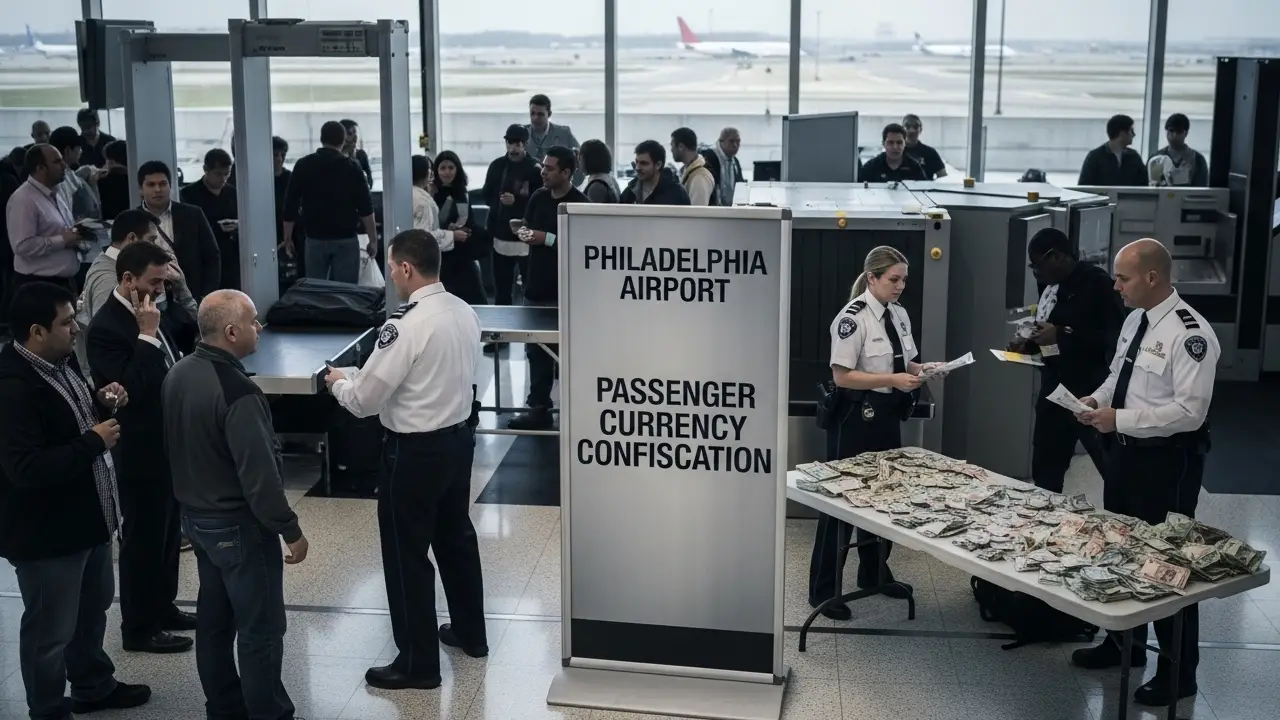
The topic of Philadelphia airport passenger currency confiscation has gained attention as more travelers report incidents involving large amounts of cash being questioned or seized at airports. While airport security is essential for safety, understanding your rights and the legal framework behind such actions is equally important. This article explains why currency confiscation happens, what laws apply, and how passengers can protect themselves while traveling.
Airports in the United States, including Philadelphia International Airport, follow federal regulations related to financial transparency and anti-money laundering. However, confusion often arises when travelers are unaware of these rules or when enforcement appears inconsistent. Knowing the facts can help you avoid unnecessary complications.
Why Currency Is Confiscated at Airports
Currency confiscation usually occurs when authorities suspect that money may be connected to illegal activities such as money laundering, drug trafficking, or tax evasion. Law enforcement agencies, including Customs and Border Protection (CBP) and Transportation Security Administration (TSA), are authorized to question passengers carrying large sums of cash.

It is important to note that carrying cash itself is not illegal. However, failing to declare amounts exceeding legal limits or providing inconsistent explanations about the source of funds can trigger suspicion. In such cases, authorities may temporarily seize the money for further investigation.
Legal Limits for Carrying Cash
In the United States, there is no strict limit on how much cash a traveler can carry domestically. However, for international travel, passengers must declare amounts exceeding $10,000. Failure to do so can lead to confiscation and possible legal penalties.
At Philadelphia International Airport, this rule is strictly enforced for international flights. Even for domestic travel, authorities may question passengers carrying unusually large amounts of money, especially if there is no clear documentation proving the source of funds.
Common Reasons Behind Passenger Complaints
Several travelers have reported concerns regarding Philadelphia airport passenger currency confiscation. The most common complaints include lack of clear explanation, delayed return of funds, and difficulty navigating the legal process required to reclaim seized money.
In many cases, passengers claim that their money was taken without sufficient evidence of wrongdoing. While authorities operate under federal civil asset forfeiture laws, critics argue that these laws can sometimes be applied too broadly.
Understanding Civil Asset Forfeiture
Civil asset forfeiture is a legal process that allows law enforcement agencies to seize property suspected of being connected to criminal activity. Unlike criminal cases, this process does not always require the owner to be convicted of a crime.
This means that even if a passenger is not charged, their cash can still be held until they prove its legitimacy. This process can take weeks or even months, making it essential for travelers to carry proper documentation.
How to Protect Yourself While Traveling
To avoid issues related to Philadelphia airport passenger currency confiscation, travelers should take several precautionary steps. First, always carry documentation that explains the origin of your money, such as bank withdrawal receipts, business records, or sale agreements.
Second, if you are traveling internationally, ensure that you declare any amount exceeding $10,000. Transparency is key when dealing with customs officials. Being honest and cooperative can significantly reduce the chances of complications.
What to Do If Your Cash Is Confiscated
If your money is seized at Philadelphia Airport, remain calm and request a detailed explanation. You should receive a receipt or official notice outlining the reason for confiscation and the next steps in the process.

It is advisable to consult a legal professional experienced in asset forfeiture cases. Acting quickly is important, as there are strict deadlines for filing claims to recover your funds. Keeping all documentation organized will strengthen your case.
Impact on Travelers and Public Concerns
The issue of Philadelphia airport passenger currency confiscation has raised broader concerns about passenger rights and transparency. Advocacy groups argue that clearer guidelines and better communication are needed to ensure fairness.
Authorities, on the other hand, maintain that such measures are necessary to combat financial crimes. Balancing security and individual rights remains a complex challenge, especially in busy international travel hubs like Philadelphia.
Key Facts at a Glance
| Category | Details |
|---|---|
| Location | Philadelphia International Airport |
| Cash Limit (Domestic) | No fixed limit, but large sums may be questioned |
| Cash Limit (International) | $10,000 (must be declared) |
| Authority Involved | CBP, TSA, Law Enforcement |
| Main Law | Civil Asset Forfeiture |
| Risk Factors | Undeclared cash, unclear source, suspicious activity |
| Recovery Process | Legal claim with documentation |
Conclusion
The issue of Philadelphia airport passenger currency confiscation highlights the importance of understanding travel regulations and financial laws. While authorities aim to prevent illegal activities, passengers must also be aware of their rights and responsibilities.
By staying informed, carrying proper documentation, and following legal requirements, travelers can reduce the risk of complications and ensure a smoother journey. Awareness is the best defense when navigating complex airport procedures.
FAQs
1. Is it illegal to carry large amounts of cash through Philadelphia Airport?
No, carrying cash is not illegal. However, large amounts may be questioned, especially if the source is unclear.
2. What happens if I don’t declare more than $10,000 for international travel?
Failure to declare can result in confiscation of the entire amount and possible legal penalties.
3. How can I prove my money is legitimate?
Carry documents such as bank statements, receipts, or business records showing the source of funds.
4. Can I get my confiscated money back?
Yes, but you must go through a legal process and provide evidence proving the money is lawful.
5. How long does it take to recover seized cash?
The process can take weeks or months depending on the complexity of the case and documentation provided.