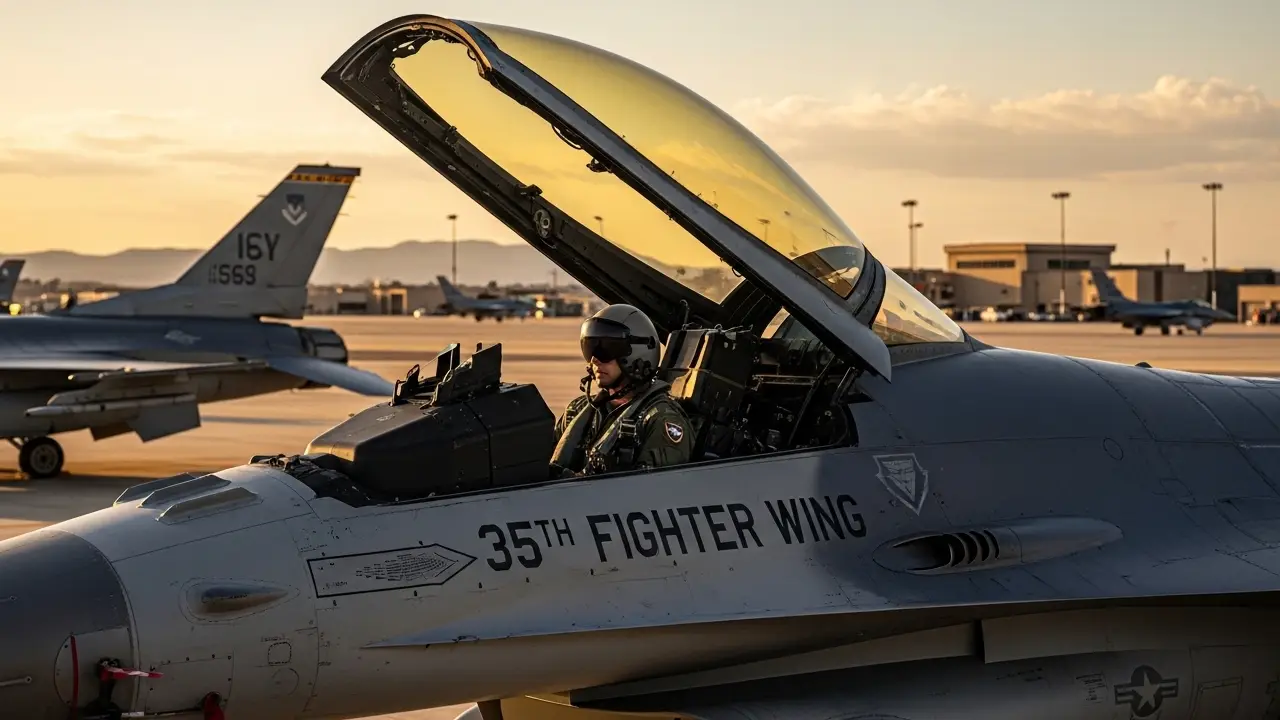
The 35th Fighter Wing is one of the most important operational units of the United States Air Force, known for its advanced combat capabilities, rapid deployment readiness, and strategic role in maintaining regional stability. Stationed at Misawa Air Base in Japan, this wing plays a crucial part in ensuring security across the Indo-Pacific region.
With modern fighter aircraft, highly trained personnel, and a mission focused on air superiority, the 35th Fighter Wing continues to evolve to meet modern warfare challenges. This article provides a complete overview of its mission, structure, aircraft, and importance in global defense operations.
Overview of the 35th Fighter Wing
The 35th Fighter Wing operates under the Pacific Air Forces (PACAF) and is primarily responsible for conducting air operations, maintaining combat readiness, and supporting allied forces. Located at Misawa Air Base, it serves as a forward-deployed force that can respond quickly to regional threats.

This wing is known for its dual-role capability, focusing on both air-to-air combat and air-to-ground strike missions. Its presence in Japan strengthens defense cooperation between the United States and its allies.
Mission and Core Responsibilities
The core mission of the 35th Fighter Wing is to maintain combat-ready forces capable of executing air superiority, precision strike, and reconnaissance operations. It also supports joint and coalition missions, ensuring coordinated responses in times of conflict or crisis.
In addition, the wing participates in regular training exercises, humanitarian missions, and disaster response operations. This wide range of responsibilities highlights its versatility and operational importance.
Aircraft Operated by the 35th Fighter Wing
The primary aircraft operated by the 35th Fighter Wing is the F-16 Fighting Falcon. This multirole fighter jet is known for its agility, precision, and advanced avionics systems, making it highly effective in both defensive and offensive missions.
The F-16 enables the wing to perform air patrols, ground attacks, and close air support missions. Its adaptability ensures that the wing can respond to a wide variety of operational scenarios.
Key Units Within the Wing
The 35th Fighter Wing is composed of several specialized groups that work together to achieve mission success. These include operations, maintenance, mission support, and medical groups.
Each unit plays a vital role, from maintaining aircraft readiness to ensuring the well-being of personnel. This integrated structure allows the wing to function efficiently in both peacetime and combat environments.
Strategic Importance in the Indo-Pacific Region
The location of the 35th Fighter Wing in Japan provides a strategic advantage for monitoring and responding to regional developments. Its proximity to key areas allows for rapid deployment and effective deterrence.
This positioning supports regional stability and strengthens partnerships with allied nations. The wing regularly participates in joint exercises, enhancing coordination and interoperability with partner forces.

Training and Readiness
Continuous training is a critical aspect of the 35th Fighter Wing. Pilots and support personnel undergo rigorous exercises to maintain high levels of readiness and operational excellence.
These training programs include simulated combat scenarios, joint drills, and real-world mission rehearsals. The goal is to ensure that the wing remains prepared for any potential challenge.
Technology and Modernization
The 35th Fighter Wing continually upgrades its systems and technologies to stay ahead in modern warfare. This includes improvements in avionics, communication systems, and weapons capabilities.
Modernization efforts ensure that the wing can operate effectively in complex and rapidly evolving environments. These advancements also enhance mission accuracy and safety.
Role in Humanitarian and Support Missions
Beyond combat operations, the 35th Fighter Wing also contributes to humanitarian efforts. It supports disaster relief operations and provides assistance during emergencies.
This role demonstrates the wing’s commitment to not only defense but also global humanitarian support. Its ability to quickly mobilize resources makes it a valuable asset in crisis situations.
Specifications of 35th Fighter Wing (Operational Overview)
| Specification | Details |
|---|---|
| Unit Name | 35th Fighter Wing |
| Base Location | Misawa Air Base, Japan |
| Command | Pacific Air Forces (PACAF) |
| Main Aircraft | F-16 Fighting Falcon |
| Primary Mission | Air Superiority & Strike Operations |
| Operational Role | Combat, Training, Humanitarian Support |
| Region of Responsibility | Indo-Pacific |
Future Outlook of the 35th Fighter Wing
The 35th Fighter Wing is expected to continue evolving with advancements in technology and changing defense strategies. Future upgrades may include next-generation aircraft and enhanced digital systems.
As global security dynamics shift, the wing will remain a key component in maintaining peace and stability. Its commitment to readiness and innovation ensures long-term effectiveness.
Conclusion
The 35th Fighter Wing stands as a vital force in modern military operations, combining advanced aircraft, skilled personnel, and strategic positioning. Its role in the Indo-Pacific region highlights its importance in global defense.
Through continuous training, modernization, and collaboration with allies, the wing maintains a strong presence capable of addressing a wide range of challenges. It remains a cornerstone of airpower and operational excellence.